
Ian Anderson -
Jethro Tull
Not a recent interview, but one I'm proud of. Never meet your heroes they say, but Ian was a true gentleman when I had the opportunity to talk to him about The Zealot Gene in 2021.
The Business-Minded Rockstar
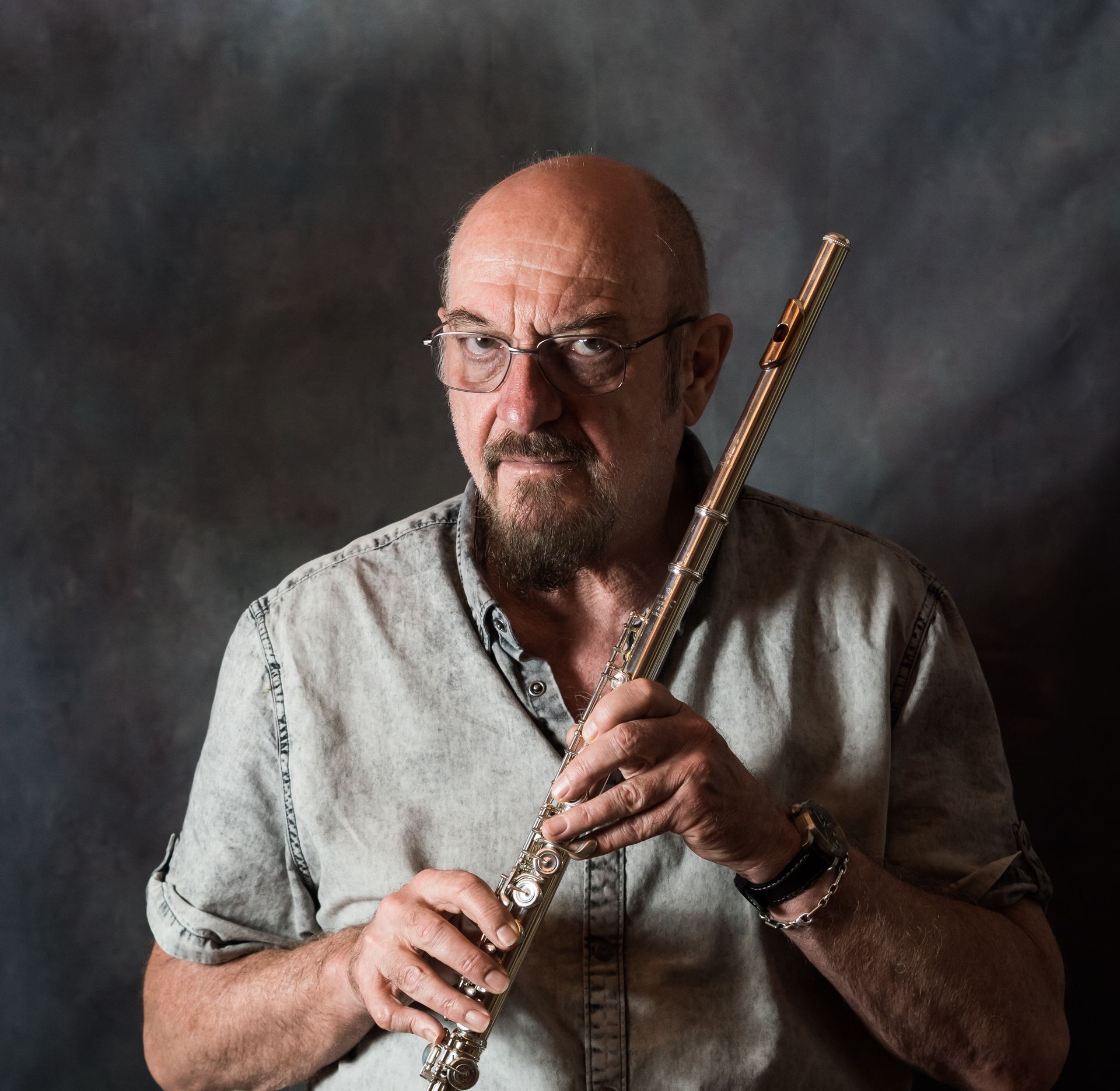
Ian Anderson is a remarkable man—and clearly not the cliché rockstar you would expect based on photos from his early days. When his then-soon-to-be father-in-law first saw a photo of Ian in the newspaper—sporting wild hair, tattered clothes, and a look in his eyes bordering on insanity—he could never have imagined his daughter bringing someone like that home. Especially since the newspaper headline famously questioned whether you would ever let your daughter marry a man of his description. In those early days, Anderson’s stage outfit famously consisted of a long coat and his iconic "living trousers," which were so stiff you could practically make them stand straight up on their own.
Yet, Anderson is a man who has always had his affairs meticulously in order. Never one for drink or drugs, he has always been a highly business-minded musician. While Led Zeppelin was chartering private planes to go on tour, Jethro Tull—then one of the biggest bands in the world—flew by scheduled commercial service or took the train and bus. As Ian notes, that is how you ensure you actually have money left over.
Anderson’s shrewd business acumen extended far beyond touring logistics:
- Maison Rouge: He was the first to own his own commercial studio alongside a mobile studio setup, later selling them at a substantial profit.
- Aquaculture: He subsequently invested in Scottish salmon farms. At one point, 75% of the salmon exported to mainland Europe came from his company, yielding an annual turnover of £400 million before he sold the business for a lucrative profit.
- The Wiltshire Estate: Today, he owns a massive estate in Wiltshire, England, where he takes a deeply environmentally conscious approach to life, converting his air miles into planting around 30,000 oak trees.
Naturally, he also keeps a state-of-the-art home studio on the property to work on new material.
The Constant Factor of Jethro Tull
Ian Anderson is Jethro Tull. While the band has seen more than 30 different members pass through its ranks over the decades, the music has always been written by Ian himself, occasionally supplemented by small contributions from others.
You could easily describe Ian Anderson as a soloist with a band. However, he is a soloist who enters into exceptionally long-term commitments with his musicians. Guitarist Martin Barre was his longest-serving collaborator at around 35 years, though he has not been part of Jethro Tull for over 16 years now. Through it all, Anderson remains the constant factor. His solo albums sound indistinguishable from Jethro Tull, and no matter who occupies the lineup, the identity of the music remains completely intact.
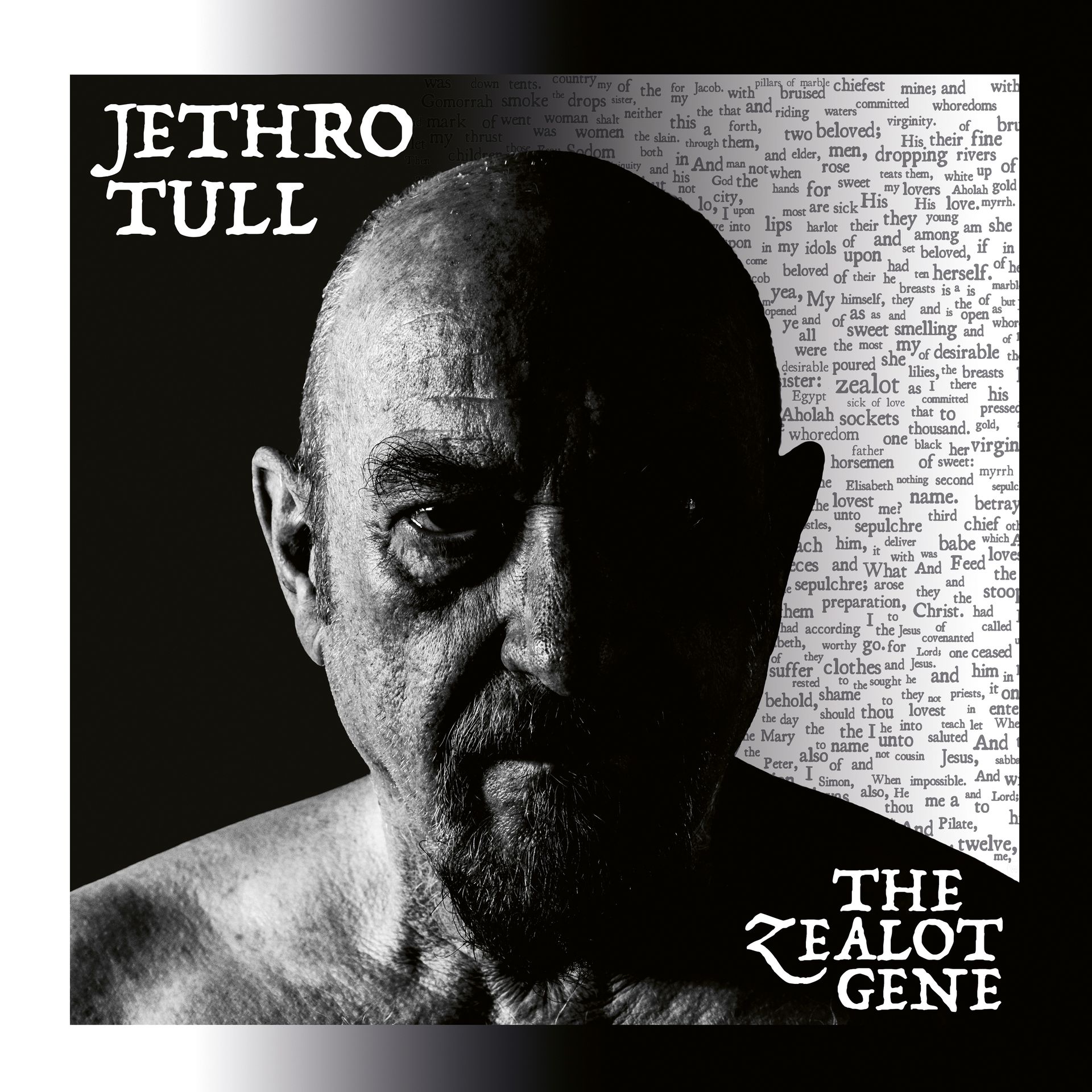
After a long hiatus following the 2003 Christmas Album, Jethro Tull is finally back with a brand-new record, The Zealot Gene.
Inside The Zealot Gene
In your own words, The Zealot Gene doesn't necessarily have a strictly Biblical theme, despite the imagery. What was the core inspiration?
Ian Anderson: "I started with the intention of writing songs about extreme human emotions—the highest, most all-consuming emotions we experience. I made a list of negative feelings like hate, anger, greed, and revenge, and balanced them with words like love, companionate love, spiritual love, compassion, and loyalty. Looking down at my paper, I realized, OK, these are all words deeply rooted in the Bible.
I decided to search the Bible for historical examples of these exact emotions and human conditions. I copied those texts and used them as a reference to ensure I had real substance when writing the lyrics. However, I didn't actually use the biblical texts themselves; I used my own words. What I did was translate those ancient texts to the present day and the real world. Only 'Mine is the Mountain' actually takes place in biblical times.
I wasn't inspired by the Bible as a religious text, but rather by the human ideas within it, which I also explain in the album liner notes. It really isn't the case that Ian Anderson has been 'born again' as a Christian, and I certainly don't want to tell people what to believe. On the contrary, while I am a supporter of the church and Christianity, I am not a Christian myself. To me, it holds a deeply cultural-historical value."
What specific real-world observations triggered you to write these songs about extreme human emotions?
Ian Anderson: "A few years ago, walking home on a Saturday night after a concert at Cardiff’s St David’s Hall, I saw crowds of completely drunk young people stumbling through the streets. Every shred of human dignity was completely gone. It was bitterly cold and wet, but because of the sheer volume of alcohol they had consumed, they didn’t even feel it. Now, that was in Cardiff, but the truth is you can witness this exact scene in almost any city across the Western world. That specific night inspired me to write the song 'Sad City Sisters.'
What also intensely frustrates me is the toxic culture that has emerged on social media—where people love to completely unleash on others, preferably under the cowardice of anonymity. We see a lot of that viciousness today, especially in the vitriol aimed at people who advocate for vaccinations.
Political discourse has grown incredibly crude and hardened as well. Donald Trump was obviously a major catalyst for that shift, but I see the exact same degradation happening here in England and in numerous other countries. Where on earth has common sense gone? It was precisely these kinds of societal shifts that triggered me to create this album."
You frequently perform fundraiser concerts in cathedrals, don't you?
Ian Anderson: "Yes, I just performed three concerts in cathedrals again as a fundraiser for their preservation and maintenance. I do that every year, with the exception of 2020 due to Covid. I truly enjoy inviting people into these cathedrals for a beautiful musical concert, but absolutely not to convert them. If I can instill in them a spiritual, cultural, and historical awareness, that is wonderful."
How much did the pandemic alter the creation of the album?
Ian Anderson: "The pandemic actually had no influence on the lyrics. I wrote everything in the first two months of 2017, and I didn't really change anything after that—just a word or two here and there during rehearsals and recordings to make the phrasing flow a bit better.
When I finished the initial songwriting, I sent the lyrics and demos to the band along with the song structures and chord charts. That allowed them to prepare at home for the three rehearsal days we had before heading into the studio. We recorded five songs in just four days. After that, we took a break, and I finished four songs myself later that year.
We toured heavily in 2018 and 2019, and I kept telling myself that I would finish the album soon. We were originally going to get together to record the last five songs jointly, but when you’re on the road constantly and only have two or three days at a time between stretches, it becomes incredibly difficult to book studio time.
And then the Covid pandemic struck in 2020. We were on tour and had just arrived in Finland when the lockdowns hit. We were no longer allowed to perform and had to head straight home. As a result, I finished those last four songs alone in my studio, with contributions sent in remotely by the band members. Fortunately, they all have their own home studios. I received their audio files by email and processed them. In May and June of 2021, I mixed and mastered the album and subsequently presented it to a number of record labels."
A True Band Album
Even with the remote recordings, it still feels like a cohesive unit.
Ian Anderson: "Fortunately, Covid didn't change the core identity of the tracks. Even though I completed the final songs myself, it has become a genuine band album. It feels like a true Jethro Tull album because the guys in the lineup have been playing with me for an average of 15 years, both in Jethro Tull and on my solo projects. They just had never appeared on an official Jethro Tull studio album before. I felt I owed it to them to honor their loyalty by having them play on a proper Tull record.
The entire recording process turned out beautifully. There is a massive amount of dynamics across the album, which somehow reminds me of Aqualung. It is highly engaging, largely because we didn't just rely on standard arrangements where there is simply bass and drums anchoring every single track."
There is also a much heavier emphasis on the piano this time around.
Ian Anderson: "That’s right! We intentionally tried to keep the arrangements simple. My previous album, Homo Erraticus, featured a heavy amount of Hammond organ sounds. This time, in close consultation with our keyboardist John O’Hara, we kept things much more 'pianistic' and introduced entirely different textures and timbres."
And the harmonica makes a welcome return as well.
Ian Anderson: "Yes, indeed. While I was tracking the backing elements, I thought, Hmm, how would this sound with a classic, bluesy harmonica? I hadn't played it in a very long time, and it ended up working incredibly well. It’s a nice nod to my early instrumental past.
Because I have the luxury of time now, I can experiment a bit more. I’ve owned my own recording spaces for a long time. In the past, that meant Maison Rouge in London and our mobile unit, but around 1982, I built my permanent home studio. It was analog at first, but by 1983, I moved into digital recording.
For The Zealot Gene band sessions, however, I actually rented an outside studio so we could all work together in the same room. When I'm in an outside studio, I don't have the tendency to constantly crawl behind the mixing desk myself. It is wonderful to record an album with a genuine live feel in just five days, which is exactly why we rehearsed so meticulously for three days beforehand."
The result absolutely sounds unmistakable.
Ian Anderson: "Thank you. After all these years and all these records, I dare say that I have developed my own distinct style. When you hear one of my albums, you know immediately that it is a Jethro Tull and Ian Anderson project. It's just like how ZZ Top will always inherently sound like ZZ Top. It is far more than just the singer's vocal delivery; it encompasses the method of songwriting, the unique character, and the overarching musical style. After well over fifty years, that signature style is hard to shake—and in fact, I don't want to get rid of it at all."
In a recent press release, you indicated that you chose InsideOut Music because the label heavily reminded you of Chrysalis—the iconic label Jethro Tull started with.
Ian Anderson: "I originally spoke with six different record labels, which resulted in various offers. I didn't simply choose the most financially lucrative deal; I had to feel a genuine emotional connection to the partnership. InsideOut Music and their label manager, Thomas Waber, sensed exactly what I wanted to achieve.
Additionally, InsideOut is a subsidiary of Sony, which guarantees incredibly strong global distribution—far better than what a smaller 'boutique label' could offer. The logistical advantage is fantastic: Sony’s headquarters are right in London, and InsideOut operates out of Berlin.
A great piece of news is that I spoke extensively with Thomas a few weeks ago, and we have already agreed to release the next album in March 2023!"
Wow, that is incredibly fast turnaround!
Ian Anderson: "Yes, but right now, no one truly knows what the world will look like in the near future. We have a massive tour of 65 concerts lined up for next year, but whether it will actually go ahead as planned? I wouldn't dare say for certain. In any case, I estimate that I will have more than enough time to produce the next record.
Inside the Label Partnership
Thomas Waber, Label Manager/A&R International at InsideOutMusic/Sony)
“The opportunity to work with Jethro Tull came completely out of the blue for us, and the whole deal came together incredibly fast. Whenever you get the chance to collaborate with one of your lifelong heroes, there is always a lingering anxiety about how the dynamic will play out and what the ultimate result will be. But I can honestly say it has been an absolutely stellar experience.
Ian has his affairs incredibly well-organized and knows exactly what he wants to achieve. At the same time, he is remarkably open to differing opinions and creative suggestions. Beyond that, he possesses a fantastic sense of humor and genuinely derives joy from working on new music and songs. We already had an established connection with Ian’s manager, James—who happens to be his son—as we had previously collaborated with him on another project. Because of that existing relationship, bringing Ian into the fold felt like a very natural process.
In this case, the old adage 'never meet your heroes' couldn't have been further from the truth. On the contrary, it was a joy. We are beyond proud and thrilled to have officially signed Jethro Tull to our label. This is a band I grew up listening to as a boy. I remember very vividly buying the live double album Bursting Out in the early 1980s, which served as my gateway to discovering the entire Jethro Tull back catalog. Ironically enough, I actually bought that specific record in a Dutch record store!”
Lineup Changes & Future Logistics
You've got a new guitarist: Joe Parrish-James. What exactly led to Florian Ophale’s departure?
Ian Anderson: "Let me start by saying that the current Jethro Tull lineup is actually the longest-lasting iteration we've ever had. John O’Hara and David Goodier have been playing with me since 2004, and Florian joined back in 2006. Scott Hammond was considered 'the new boy,' and he's been with us since 2010!
Florian sat down with me in 2019 and explained that he wanted to step away from the grueling demands of constant touring. He built his own space, Red Box Studio, along with a professional photography studio for his wife. He wanted to focus his energy there, tracking and producing other musicians, which he is exceptionally good at. In December 2019, he performed his final cathedral concert with us as a full-time member. However, he still plays everything on The Zealot Gene, with the exception of just one track.
Joe Parrish-James stepped in as his official replacement, but Florian actually returned briefly in 2020 to cover for Joe during a string of concerts in Switzerland, Germany, and Denmark. Joe hadn’t received his double vaccination yet at the time and would have faced strict quarantines in every single country we visited. Florian was the logical choice to step in for his own replacement! It is a challenging landscape for Florian right now, because with the ongoing Covid situation, the live music business frequently grinds to a halt. Times are incredibly tough for independent musicians.
Joe is fully back with us now, of course, and we’ve already been able to pull off some fantastic concerts this year. We are going to see a lot more of him moving forward. He also fronts his own band, Albion, and they are excellent. Their first album is slated to be ready in January 2022.
I did jokingly tell him that he needs to change the band name, though! If you just check Google, you will see how many projects have already released music under the name Albion. In the old days, we had to formally write to the Performing Rights Society to check band names and song titles, but now you can verify it in seconds. If I were his manager, I would have him change it immediately! But naming critiques aside, I am absolutely thrilled to have him in the band. He is a massive multi-talent."
(Joe Parrish-James left Jethro Tull in 2024 and was replaced bij his Albion band member Jack Clark. Both keep performing with Albion)
Global Supply Chains & The Silent Singing Book
How are things progressing with your upcoming book, Silent Singing?
Ian Anderson: "It is a difficult time for manufacturing in every respect. My book Silent Singing, which compiles all of my lyrics, has been significantly delayed due to Covid disruptions and the massive shipping shipwreck backlog in the Suez Canal. The raw paper and ink supply lines largely stem from China, which is causing widespread delays across the publishing industry.
It was originally supposed to hit shelves in August 2021. I have finally seen a finished physical proof copy, though, so it seems that consumer deliveries will start rolling out very soon.
But these shortages aren't just affecting printed books; if you want to have a new car shipped from Europe right now, it takes a year because factories are missing critical microchips and components.
The same bottleneck applies to vinyl production. There are very few functional pressing plants left in the world, and before you know it, a label is stuck on a waiting list for a year just to get records pressed. That is precisely why I chose March 2023 for the release date of the next album. To hit that target, I have to ensure I have the master completely finished and turned in by September 2022."
Looking to the Future
What do the long-term future plans look like for you?
Ian Anderson: "A vast number of shows are planned for the coming year, followed closely by the launch of the next studio album. Beyond that, I have a few other unique projects I want to tackle. I’m certainly not getting any younger, and I have a personal bucket list of things I’d like to accomplish in my private life."
Speaking of your private life, it's rumored that you usually travel completely alone when you are out on tour.
Ian Anderson: "Indeed, that is exactly what I do. I don't particularly like being crowded by people, and I am very much a loner at heart. I always have been. I vastly prefer eating alone, and if at all possible, in an entirely empty Indian restaurant. The stereotypical, chaotic lifestyle of a 'rockstar' has never had an ounce of appeal to me. Now, at my age, I find this quiet, independent way of touring to be the most enjoyable. That being said, it doesn’t alter the fact that I absolutely love stepping onto the stage with my band every night and creating new music with them, just as we've done here."
Your vocal performance on The Zealot Gene is excellent.
Ian Anderson: "Thanks! I work incredibly hard on maintaining it. As many people know, I cope with a chronic lung condition, and I have been taking specialized vocal lessons for a number of years now to fundamentally improve my breathing technique.
Nowadays, young singers and flutists are taught proper breath control right from the start of their training, but I never had the benefit of that education when I was starting out. The decades I spent smoking, combined with all those toxic, old-fashioned smoke machines we used on stage back in the day, certainly didn't do my lungs any favors.
Consequently, I have to train hard every day. My lung condition also makes me terribly careful during these ongoing health crises. Catching respiratory illnesses can be fatal for me, and I don't want to take any unnecessary risks—because I still have a hell of a lot more music left to give!"